i entered nursing to make a difference in the lives of others. to serve humanity. to relieve suffering. inspired by my 'special' son, and his frequent contact with the medical system, i traded in my civil servant, speech writing hat for a stethoscope. my nursing training focussed on holistic, patient-centred care and emphasized critical thinking. in essence, what kind of nurse do i want to be and why? after a few months of acute care practice, I started to grasp the importance of those questions. they framed my practice. in every task, in every interaction, in every intervention, a nurse makes a subconscious choice as to the kind of nursing in which she wishes to engage. as i gained more experience i appreciated a new dimension to the question 'what kind of nurse do i want to be?'
as i gained more experience on the surgical nursing unit, it became clear to me that a nurse's role centres around the patient's response to illness and unwellness. that means bedside care. the paraphenelia, the pumps that beep and hum, the plastic and rubber tubes which we insert into peoples' orifaces, the needles, vials, and pills - a nurse these do not make. a nurse engages with patients whose body betrayals have thrust a painful metamorphosis upon their lives. with serious illness often comes loss of some kind. loss of normality, normalcy. loss of independence. loss of the little things which we encompass in our daily lives.
no amount of morphine, or iv fluids or physiotherapy will cure this sort of loss. the art of nursing lies in the delicate skill of assisting our patients in navigating the changes associated with these losses, in adjusting to an altered health status. and in guiding them to rebuild with what remains. with diginity. with compassion. and always, always, always while doing no harm.
this navigating - its the primary and most essential piece of a nurses' job, and yet its the part of the job for which we seem to have the least amount of time. and therin lies the incredible heartbreak of nursing practice.
Tuesday, October 31, 2006
why hallowe'en?
hallowe'en. now known mostly as halloween. really, its a shortened version of all hallows eve - a pagan holiday that has its origins in ireland. the ancient celts noticed that the bright half of the year ended on october 31st of each year. the dark half of the year, winter, they associated with death. the end of summer the celts saw as highly spiritually resonant - when the boundary separating the living and the dead became blurred.
the ancient celts celebrated all hallow's eve with a fire feast - a bon fire would ward off any evil spirits that may travel to earth from the other side. the festival day sort of became solidified into celtic and saxon culture when, in the 8th or 9th century, pope gregory moved the catholic 'all souls day' - a day to remember all souls condemned to purgatory.
the tradition of trick or treating appears to have its origins in the all souls parades that took place in england. the poor would go door to door, begging for food, and families would give them pastries , called soul cakes, in exchange for a promise to pray for dead family members. in ireland, children would go door to door collecting nuts and sweets, etc for the festival.
so ... why do we still do the trick or treat thing? i mean, think about it. we invest so much time, effort, energy and resources teaching our children not to talk to strangers. remember, being a kid, and the constable would come to your class and tell you all about the bad people who want to lure you into their cars or houses with candy? so .... ? why do we spend soooo much time, effort, energy and money promoting a festival that involves our kids going door to door and begging for candy from strangers?!
i just don't get it. the tradition has gotten so warped by the commercialism ... the capitalism ... in our society. all hallows eve now seems so far removed from its roots. its not about remembering the dead. its just about consumption. how grotesque!
the ancient celts celebrated all hallow's eve with a fire feast - a bon fire would ward off any evil spirits that may travel to earth from the other side. the festival day sort of became solidified into celtic and saxon culture when, in the 8th or 9th century, pope gregory moved the catholic 'all souls day' - a day to remember all souls condemned to purgatory.
the tradition of trick or treating appears to have its origins in the all souls parades that took place in england. the poor would go door to door, begging for food, and families would give them pastries , called soul cakes, in exchange for a promise to pray for dead family members. in ireland, children would go door to door collecting nuts and sweets, etc for the festival.
so ... why do we still do the trick or treat thing? i mean, think about it. we invest so much time, effort, energy and resources teaching our children not to talk to strangers. remember, being a kid, and the constable would come to your class and tell you all about the bad people who want to lure you into their cars or houses with candy? so .... ? why do we spend soooo much time, effort, energy and money promoting a festival that involves our kids going door to door and begging for candy from strangers?!
i just don't get it. the tradition has gotten so warped by the commercialism ... the capitalism ... in our society. all hallows eve now seems so far removed from its roots. its not about remembering the dead. its just about consumption. how grotesque!
Tags: hallowe'en, pop culture, society 2 comments

Saturday, October 28, 2006
freedom of the press?
Saturday, October 28, 2006
remember this story? effectively, CNN made a decision to air video clips depicting insurgent fighters targeting US soldiers. and then ... oh outrage flew about. hmmm. why? coz we wanna take the blue pill? y'know - just look away and hope it'll all go away?
maybe if none of the tax paying americans see exactly what is going on in iraq, then ... well, maybe the government could keep a lid on this thing until after the election? RIGHT. and if you believe that ... well, i got some land to sell you. ha ha.
so ... given that the clips shown BLACKED OUT any scenes actually showing a US soldier getting shot ... what's the problem? do we kid ourselves as to what, indeed goes on during war? and ... are those who oppose CNN's decision to air the clips going to tell me some story about the sanctity of life? ok. so, its only dissing the sanctity of life to watch death when its real, not when its staged (ie fictional) purely for entertainment? riiiiight. [can you here that my voice is dripping with sarcasm here? sorry - hard to resist letting the sarcasm gremlin out for a post].
PTOSH! take your blinders off. the only way to put an end to all this suffering is to acknowledge it ... that means witness the suffering. oh - but is this asking too much? would we all rather be watching monday night football, or desperate housewives or something equally as assanine? i hope not!
maybe if none of the tax paying americans see exactly what is going on in iraq, then ... well, maybe the government could keep a lid on this thing until after the election? RIGHT. and if you believe that ... well, i got some land to sell you. ha ha.
so ... given that the clips shown BLACKED OUT any scenes actually showing a US soldier getting shot ... what's the problem? do we kid ourselves as to what, indeed goes on during war? and ... are those who oppose CNN's decision to air the clips going to tell me some story about the sanctity of life? ok. so, its only dissing the sanctity of life to watch death when its real, not when its staged (ie fictional) purely for entertainment? riiiiight. [can you here that my voice is dripping with sarcasm here? sorry - hard to resist letting the sarcasm gremlin out for a post].
PTOSH! take your blinders off. the only way to put an end to all this suffering is to acknowledge it ... that means witness the suffering. oh - but is this asking too much? would we all rather be watching monday night football, or desperate housewives or something equally as assanine? i hope not!
Tags: free speech, middle east, press, usa, war 1 comments
Friday, October 27, 2006
sacred life - part 1
Friday, October 27, 2006
ok. i'm thinking about life, euthanasia, abortion, end-of-life issues. they're on my mind. because i've contemplated alot lately the life sanctity, its sacredness. i guess i'm trying to juxtapose the spiritual with the corporeal. its challenging. what follows is my attempt to detangle all the convolutions about life and the purpose of suffering that currently press on my psyche and my heart. its written in the 3rd person, which afforded me the ability to get some things off my chest. its sort of a stream of consciousness poured onto the screen. so, forgive me if clarity seems lacking. it all makes sense to me. hoping it does to you too. please, share any constructive thoughts or feelings in a comment. i'm curious about what anyone thinks and feels. i wonder, does anyone else think of this stuff?

she struggles. she wrestles. with the concept of LIFE. what constitutes life? she realizes the question sounds ridiculous. so much so as to seem flip. but ... she wonders. what does constitute life? she feels g-d. she innately knows him. and sees the soul as a spark of g-d. an animating force. housed - on this plane of existence - within a decaying shell - the human body. the soul - a life force.
she wonders, still. what constitutes life? animation? does animation constitute life? does cognition constitute life? where does the soul go, when a person lies unconscious? when a person cannot express itself tangibly? can life support really keep a vibrant sacred soul in a failed shell? and what of conception? has the fusion of two souls, during sexual intercourse, miraculously produced a third? does this occur at the moment of fertilization? she surmises for herself that it must. it simply must. and so ... yes, she believes, at her core, that life begins at the moment of conception. the presence of a living soul does not necessarily coincide with the presence of cognitive awareness. she innately feels this truth. the presence of a living soul only coincide's with g-d's breath.
but still she struggles. with existing. with existing while honoring life. while honoring humanity. while battling suffering. she wonders, in a reserved thought whether suffering fulfills a purpose. or whether suffering simply exists as the cummulative result of humanity's choices. it does not seem clear. and that's why she wrestles. and does it seem related to the issue of life? well, yes. in her convulted mind it does.
she questions her previous mode of thinking. which basically placed the relief of suffering above the sanctity of life. which placed the sanctity of humanity above the sacredness of life. she believes that every occurence has a cosmic purpose. including suffering. even though suffering to her seems the spawn of humanity, knowledge and free will. she believes. and at times it seems an insurmountable standard of existence. but she believes. she knows. she thinks of how the sacredness of life ... the sanctity of humanity ... and presence of suffering have carved her life.

she remembers thinking about her youngest son. about how she felt, at the lowest points of her life with him. about how she chose to feed her despair by saying she felt it better to have only had one 'normal' child, instead of one 'normal' child and one 'defective' child. yes, she feels mild shame, at disclosing to you, dear reader, that, at times, she wished she'd never had him. and, that she deliberately chose the word 'defective.' s opposed to 'special.' and, ironically, now that she no longer has that second, special child to love, her soul admonishes her for feeding her despair and bitterness. and for starving her love and compassion.
every fibre of her being knows that abortion does terminate life. she feels, at the core of her femininity, that no woman has the right to chose abortion. she feels that, rather, women have a responsibility to harness their creative - ie life-giving - powers with respect, wisdom, and love. as opposed to lust, greed and self-gratification. however, she wrestles, here, too. she wonders, about the sanctity of a life conceived in the throes of violence ... of utter disrespect ... of fear ... of violation. she wonders - what if the girl did not chose? and ... what if she trusted, and that trust got betrayed? does a life produced in violence and violation, in an act of abuse, hold any sanctity? she wonders ... does it constitute murder, when a girl chooses to abort a life created during such an act of violence? she tells herself that it does not. she must believe it. for her own psyche, she must. but she does not know if she can believe it.
she wonders. if that's why she spent so much her sanity in a career that saves life. she wonders if its her attempt at some sort of cosmic repetence. to try to add life. to make up for the one she took. she also wonders, does it work that way? and she wonders. didn't her father violate life, too? she surely believes he dishonored humanity.
and she wonders. about 'honoring thy mother and father,' she wonders. does it matter what parents do? does g-d still want her to honor her father? despite what he did? and her mother? for standing by and never fighting to protect her children? she feels that, yes, she must still honor these parents. she cannot ever touch her father. or allow him to touch her. but her soul tells her she must honor him. and her soul feels only mercy and sorrow for her mother. and love. and yes, honor too.
images originally uploaded by loswl and ivory illusion

she struggles. she wrestles. with the concept of LIFE. what constitutes life? she realizes the question sounds ridiculous. so much so as to seem flip. but ... she wonders. what does constitute life? she feels g-d. she innately knows him. and sees the soul as a spark of g-d. an animating force. housed - on this plane of existence - within a decaying shell - the human body. the soul - a life force.
she wonders, still. what constitutes life? animation? does animation constitute life? does cognition constitute life? where does the soul go, when a person lies unconscious? when a person cannot express itself tangibly? can life support really keep a vibrant sacred soul in a failed shell? and what of conception? has the fusion of two souls, during sexual intercourse, miraculously produced a third? does this occur at the moment of fertilization? she surmises for herself that it must. it simply must. and so ... yes, she believes, at her core, that life begins at the moment of conception. the presence of a living soul does not necessarily coincide with the presence of cognitive awareness. she innately feels this truth. the presence of a living soul only coincide's with g-d's breath.
but still she struggles. with existing. with existing while honoring life. while honoring humanity. while battling suffering. she wonders, in a reserved thought whether suffering fulfills a purpose. or whether suffering simply exists as the cummulative result of humanity's choices. it does not seem clear. and that's why she wrestles. and does it seem related to the issue of life? well, yes. in her convulted mind it does.
she questions her previous mode of thinking. which basically placed the relief of suffering above the sanctity of life. which placed the sanctity of humanity above the sacredness of life. she believes that every occurence has a cosmic purpose. including suffering. even though suffering to her seems the spawn of humanity, knowledge and free will. she believes. and at times it seems an insurmountable standard of existence. but she believes. she knows. she thinks of how the sacredness of life ... the sanctity of humanity ... and presence of suffering have carved her life.
she remembers thinking about her youngest son. about how she felt, at the lowest points of her life with him. about how she chose to feed her despair by saying she felt it better to have only had one 'normal' child, instead of one 'normal' child and one 'defective' child. yes, she feels mild shame, at disclosing to you, dear reader, that, at times, she wished she'd never had him. and, that she deliberately chose the word 'defective.' s opposed to 'special.' and, ironically, now that she no longer has that second, special child to love, her soul admonishes her for feeding her despair and bitterness. and for starving her love and compassion.
every fibre of her being knows that abortion does terminate life. she feels, at the core of her femininity, that no woman has the right to chose abortion. she feels that, rather, women have a responsibility to harness their creative - ie life-giving - powers with respect, wisdom, and love. as opposed to lust, greed and self-gratification. however, she wrestles, here, too. she wonders, about the sanctity of a life conceived in the throes of violence ... of utter disrespect ... of fear ... of violation. she wonders - what if the girl did not chose? and ... what if she trusted, and that trust got betrayed? does a life produced in violence and violation, in an act of abuse, hold any sanctity? she wonders ... does it constitute murder, when a girl chooses to abort a life created during such an act of violence? she tells herself that it does not. she must believe it. for her own psyche, she must. but she does not know if she can believe it.
she wonders. if that's why she spent so much her sanity in a career that saves life. she wonders if its her attempt at some sort of cosmic repetence. to try to add life. to make up for the one she took. she also wonders, does it work that way? and she wonders. didn't her father violate life, too? she surely believes he dishonored humanity.
and she wonders. about 'honoring thy mother and father,' she wonders. does it matter what parents do? does g-d still want her to honor her father? despite what he did? and her mother? for standing by and never fighting to protect her children? she feels that, yes, she must still honor these parents. she cannot ever touch her father. or allow him to touch her. but her soul tells her she must honor him. and her soul feels only mercy and sorrow for her mother. and love. and yes, honor too.
she wonders. and wrestles.
with herself. with life. with angels.
and she feels the warm hand of g-d
touch her, at her core.
with herself. with life. with angels.
and she feels the warm hand of g-d
touch her, at her core.
images originally uploaded by loswl and ivory illusion
Tags: Thoughtful 7 comments
unreacting - a lesson i'm learning
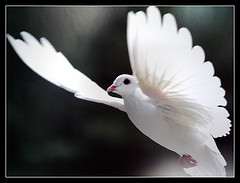
the nature of a human being is to simply react -
to give back the medicine others give you.
here's some advice from the ancient sages:
ignore the urge to return bad with bad,
hurt with hurt, scorn with scorn --
and the heavens will ignore
all the mess you've made in the past.
image originally uploaded by hanuta
Tags: humanity, wisdom 1 comments
Wednesday, October 25, 2006
without a national identity: iraq
Wednesday, October 25, 2006
in march of 1933, feisel I, then british-assigned monarch of iraq, had this to say about his country:
in 1959 historian hanna batutu wrote the following of iraq:
so ... if we read these thoughts correctly, we begin to see the tribal forces at play in the region known as iraq. did you know, dear reader, of such a tangled and complex historical context in iraq? did you really think it would simply take removal of saddam hussein to "correct" the region? how naive, indeed! and did the region need correcting at all, any more than the usa needed 'correcting' during its own civil war? any more than canada required 'correcting' during the FLQ crisis?
and ... dear reader, what do you think happened to this region in the post WWI period, when victors of the great war carved up the lands of the defeated ottomans? well, exploitive distribution, of course. with western interests in mind. does it surprise you to know that little regard was given to involving the iraqi people in the formation of their own fate?
its interesting, isn't it? learning that colonial interest in mosul-kirkuk did not surface until AFTER discovery of oil in this region? and that oil - and western dependence on same - motivated the brits' invasion and subsequent occupation of iraq during WWII?
historical context. sociologic context. tribal underpinnings of the populace. when one considers iraq, one MUST consider context. and so, that means ... what? simply, that one must consider the current uprising of insurgents in its context. the region and peoples of iraq have suffered occupation and domination for very much of the past 748 years. knowing this, king feisel I's remarks, made 73 years ago seems so very fitting today.
and ... it leads me to ask. what does america think its doing, in iraq? and why are we, the world, so surprised at the reaction of iraqis?
and, more importantly. this begs me to ask. through what process does a mass of humans become a nation of people? can external and culturally alien entities impose such a process on the population of iraq? how much of a nation's development and social progress must simply originate from WITHIN? and what can the west do to assist? and that line separating domination from guidance? do we know where it exists? do we even know it exists, at all?
'There is still -- and I say this with a heart full of sorrow -- no Iraqi people but an unimaginable mass of human beings, devoid of any patriotic idea, imbued with religious traditions and absurdities, connected by no common tie, giving ear to evil, prone to anarchy and perpetually ready to rise against any government whatever.'
in 1959 historian hanna batutu wrote the following of iraq:
"For four days and four nights Kurds and Yezidis stood against Arabs; Assyrian and Aramaean Christians against Arab Muslims; the Arab tribe of Albu Mutaiwat against the Arab tribe of Shammar; the Kurdish tribe of al-Gargariyyah against Arab Albu Mutaiwat; the peasants of Mosul country against their landlords; the soldiers of the Fifth Brigade against their officers; the periphery of the city of Mosul against its centre; the plebeians of the Arab quarters of al-Makkawi and Wadi Hajar against the aristocrats of the Arab quarter of ad-Dawwash; and with the quarter of Bab al-Baid, the family of al-Rajabu against its traditional rivals, the Aghawat."
so ... if we read these thoughts correctly, we begin to see the tribal forces at play in the region known as iraq. did you know, dear reader, of such a tangled and complex historical context in iraq? did you really think it would simply take removal of saddam hussein to "correct" the region? how naive, indeed! and did the region need correcting at all, any more than the usa needed 'correcting' during its own civil war? any more than canada required 'correcting' during the FLQ crisis?
and ... dear reader, what do you think happened to this region in the post WWI period, when victors of the great war carved up the lands of the defeated ottomans? well, exploitive distribution, of course. with western interests in mind. does it surprise you to know that little regard was given to involving the iraqi people in the formation of their own fate?
its interesting, isn't it? learning that colonial interest in mosul-kirkuk did not surface until AFTER discovery of oil in this region? and that oil - and western dependence on same - motivated the brits' invasion and subsequent occupation of iraq during WWII?
historical context. sociologic context. tribal underpinnings of the populace. when one considers iraq, one MUST consider context. and so, that means ... what? simply, that one must consider the current uprising of insurgents in its context. the region and peoples of iraq have suffered occupation and domination for very much of the past 748 years. knowing this, king feisel I's remarks, made 73 years ago seems so very fitting today.
and ... it leads me to ask. what does america think its doing, in iraq? and why are we, the world, so surprised at the reaction of iraqis?
and, more importantly. this begs me to ask. through what process does a mass of humans become a nation of people? can external and culturally alien entities impose such a process on the population of iraq? how much of a nation's development and social progress must simply originate from WITHIN? and what can the west do to assist? and that line separating domination from guidance? do we know where it exists? do we even know it exists, at all?
Tags: history, iraq, middle east, usa, war measures act 0 comments
my mosaic lense (she = me)
 she sees the world thru her markedly mosaic lense. she realized how it colours her vision of humanity. it raises her expectations of humanity. for the beauty of a mosaic lies in its contrast of differences. she believes in the principle of equality. and so, she cannot accept that differences must all be melted into some sort of sluggish paste. that view, she sees as intolerant. equality for all means respect of each and every individual. she believes that this view makes her quintessentially canadian. the poetic beauty of the mosaic embodies, symbolically, the canadian identity.
her mosaic lense makes murky her visualization of cultural identity versus assimilation into society. while some others around her appear to have the answers ... or seem content acting upon an initial emotional reaction to a cultural controversy ... she feels bewildered. puzzled, by the issues. she understands the desire to express oneself religiously - nun's habits, turbans, hijabs/ niqabs, and yarmulkes. she also understands the importance of maintaining a secular society to honor egalitarianism.
her mosaic lense muddies clarity. she understands where jack straw is coming from regarding the issue of the niqab - veil that muslim women wear which covers their face, save for their eyes. she understands people, and sees how speaking to someone - whose face one cannot see - could evoke some discomfort. she personally thinks that a requirement to cover one's face seems tantamount to an attempt to marginalize ... render invisible. to silence women. however, she respects a woman's desire to express herself religiously. and so ... she doesn't know. how does a society juxtapose or balance freedom of religious expression with the requirements of a secular society?
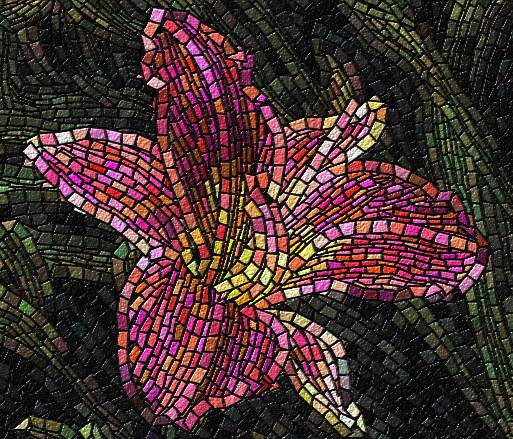 her mosaic lense causes her to stumble, when it comes to consideration of fundamental issues, such as health care. politically, administratively, and quite possibly financially as well, universal health care seems questionable. but ... equality means all citizens receive equal treatment. democracy fundamentally goes hand in hand with equality for all. so ... how to reconcile dis-equal access to a basic requirement for human existence? this seems at odds with egalitarianism. and so ... these opposing views wrestle within her.
culture and religion provide shape, form, identity, context. they can even promote growth and enlightenment, as long as they're not excessively repressive, exclusivist and/or reductionist. to diminish the cultural identity of an individual or a group seems to her like ripping the lovely, thriving flowers from the ground. that said, she resents attempts by a particular religion to manipulate society for its own promotion. she thinks that christianity has really come to embody idolatry. so much opulent and massive machinery ... g-d does not exist there anymore. it makes her soooo angry. she seeks truth. she feels like that droplet ... searching for its source. she knows g-d provides her context. she feels it. g-d cannot live where intolerance does. that she knows also.
image originally uploaded by silkdiver and firelily
Tags: canadian society, culture, humanity, me 10 comments
Subscribe to:
Posts (Atom)




 This means challenging my self to compassionate, encouraging, genuine and hostile-free exchanges. It also means contemplating my reaction to the thoughts, feelings and expressions of others, prior to acting upon them.

